
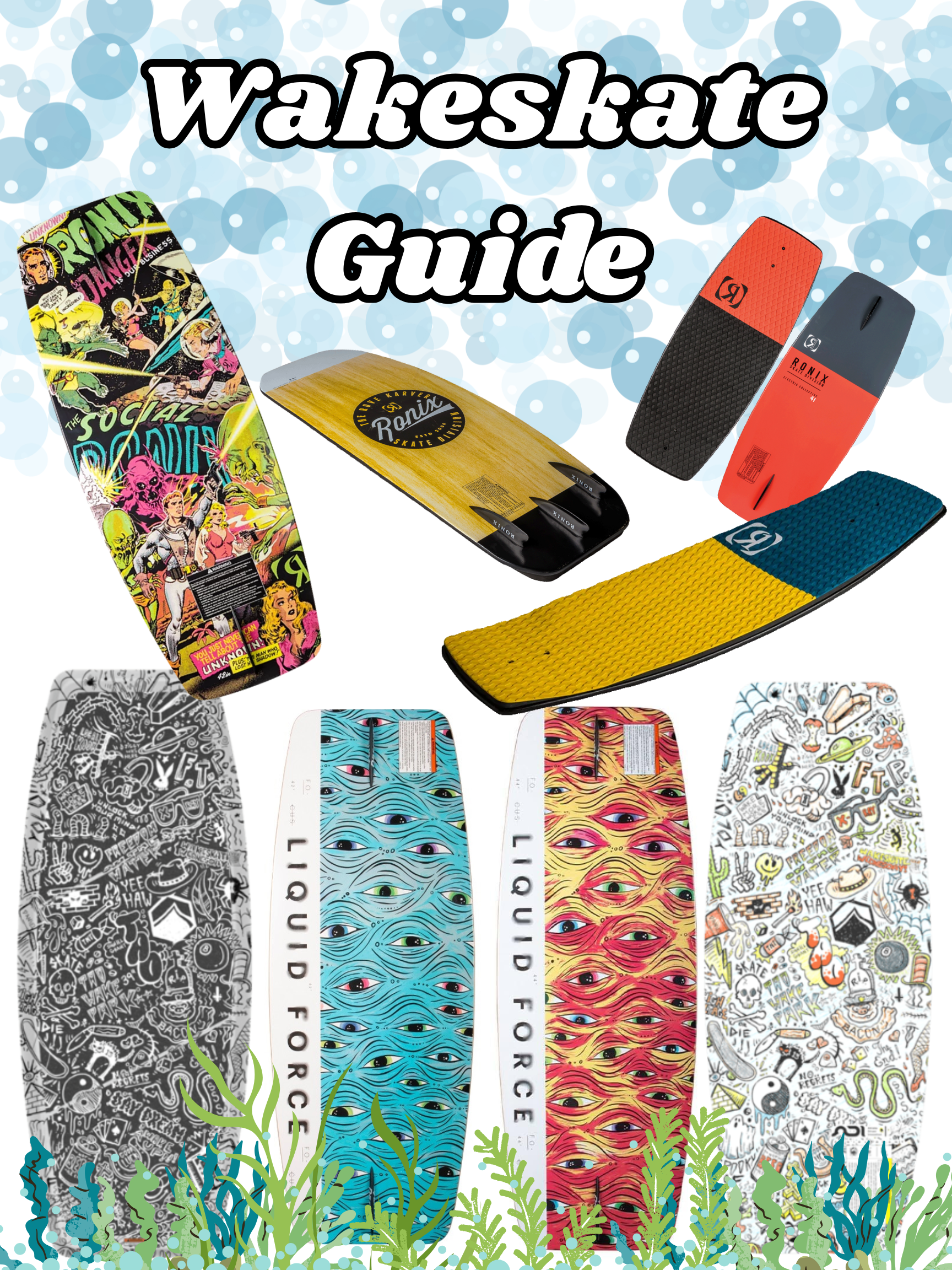
Wakeskate Guide
Feb 10th 2026
A general overview of what wakeskates are and how to shred on them.
What is it?
Think of wakeskating like a mix between wakeboarding and skateboarding. Wakeskates function like a wakeboard, but your feet are not strapped to anything. This gives you more freedom when riding. Wakeskates open up a world of new possibilities when it comes to tricks and maneuvers. Wakeskating requires less speed and power from your vessel, making it a great choice for any watercraft or skill level.
Choosing the Right Board
There are several factors to consider when selecting your board: your skill level, riding style, and preferred speed. For those starting out, focus on honing in on the basics and opt for a wider, shorter board for improved stability and balance. Advanced riders who want to try more complex moves, such as kickflips and ollies, will want a longer and narrower board to generate more speed and control. If you want to ride more similarly to a wakeboard, go for a larger board. The bigger boards will be more foregiving whe preforming big air tricks. If you want to ride like a skateboarder, youll wan a smaller, lighter board, making it easier handle when attempting to flip or spin the board.
Size Chart
|
Size
|
Weight
|
Skill
|
| 39-41 in | 90-170lbs | Beginner / Intermediate |
| 42-43 in | 150-200lbs | Intermediate |
| 44-46 in | 180lbs+ | Advanced riders |
Types of Wakeskates
Standard
These wakeskates typically have a flat top deck and are great for beginners or to just have on board for anyone to try.
Concave
These boards are going to be more rounded; they hold your feet to the skate, allowing for more control when performing tricks.
Bi-level
These are made up of two parts: the bottom deck and the separate top deck. The bottom deck is the same as most other wakeskates, but it is attached to a separate top deck. The top portion is similar to a skateboard. The bottom deck gives you speed and control, while the top deck sticks your feet to the board to create massive pops off flat water. The separation of the top deck and the water line gives riders a better chance at recovery after landing.
Rocker Types
Continuous Rocker
Continuous rocker types have a smooth, continuous arch shape, giving you a fast and smooth ride. You get a lot of speed going on a continuous rocker, and it will shoot you out further into the flats with predictable pop. These rocker types are great for carving on those glassy mornings.
3-Stage Rocker
These rocker types are set up with two distinct angles with a flat spot in the center of the board. The sharper angles on the ends of the boards cause more vertical pop when you hit the wake. The more dramatic the 3-stage rocker is, the looser the board will feel on the surface of the water. This shape will be slower as you plow through the water, and you will feel landings more aggressively in comparison to a continuous rocker type.
Hybrid Rocker
A hybrid rocker is a mix of the first two rocker types; they typically have a more sloped angle. Hybrid wakeskates will have more rounded rails in the center and sharper rails on the edges, providing forgiveness on rails and sharp edges for cutting into the wake.
How to Ride
- Get in the water with your heels on the board near the edge, and your toes should be near the center of the board. The board should be perpendicular to the back of the boat.
- Hold onto the rope attached to the boat and let it pull you up until you've gained enough speed to stand. A little tip is when the boat is pulling you up, don't bend your arms; instead, pretend like it is a friend helping you up.
- Keep your knees bent and the rope in front of your body with your arms straight.
- Turn the board parallel to the boat. You want your dominant foot toward the boat; you can do this by putting pressure on your back foot.
- Chest up, knees bent, arms straight, feet staggered, and handle at waist level to start riding.
- To move around, put pressure on your feet. To move forward, push on your front foot and to slow down pressure on your back foot.
- Lean into edges to turn. You want your chest over your toes and use heel-to-toe edges to do the turning, lean the way you want to go.
Materials
Wood V.S. Composite
There are two typical materials wakeskates are made of: wood and composite. Composite is a durable and lightweight material. These wakeskates will have a more similar feel to a wakeboard. It is favored by beginners due to its more forgiving nature when falling. Wood offers a lively skate-like feel but is less durable. They are heavier, sitting lower in the water, which makes it more comfortable when performing tricks. Wood wakeskates also have more spring to them and are better suited for a more advanced rider.
Foam V.S. Grip Tape
There are two options for grip on the top of your board: grip tape and foam. Some people opt to add grip tape to the top of their boards, similar to skateboards gritty texture. If you decide to go with grip tape, shoes are a must to protect your ankles and toes from injury. Most people use old skating shoes or any shoe that doesn't retain a large amount of water, but wake skating shoes are available. Grip tape provided excellent traction, especially when performing tricks and riding fast. Foam is a better option for barefoot riders and beginners. It tends to be more forgiving during falls and provides some cushion when landing.
Tips
- Use a heavy board to learn (makes it more stable and less squirlly)
- Try new tricks outside the wake.
- Removing fins will allow you to drift and slide more easily when performing tricks.
- Wear shorter shorts to keep your knees free to move around.
- The foundation of most tricks is the ollie, so master it.
- When jumping, bring your knees up, not your feet. This will keep you more balanced.
- When landing, keep your legs up until the last second. Landing too soon will push your board away.
- Stay low after landing to prevent bouncing.
- For toeside wake jumps, try putting more weight on the back of your foot as you attempt the jump to keep the board in front of you.