
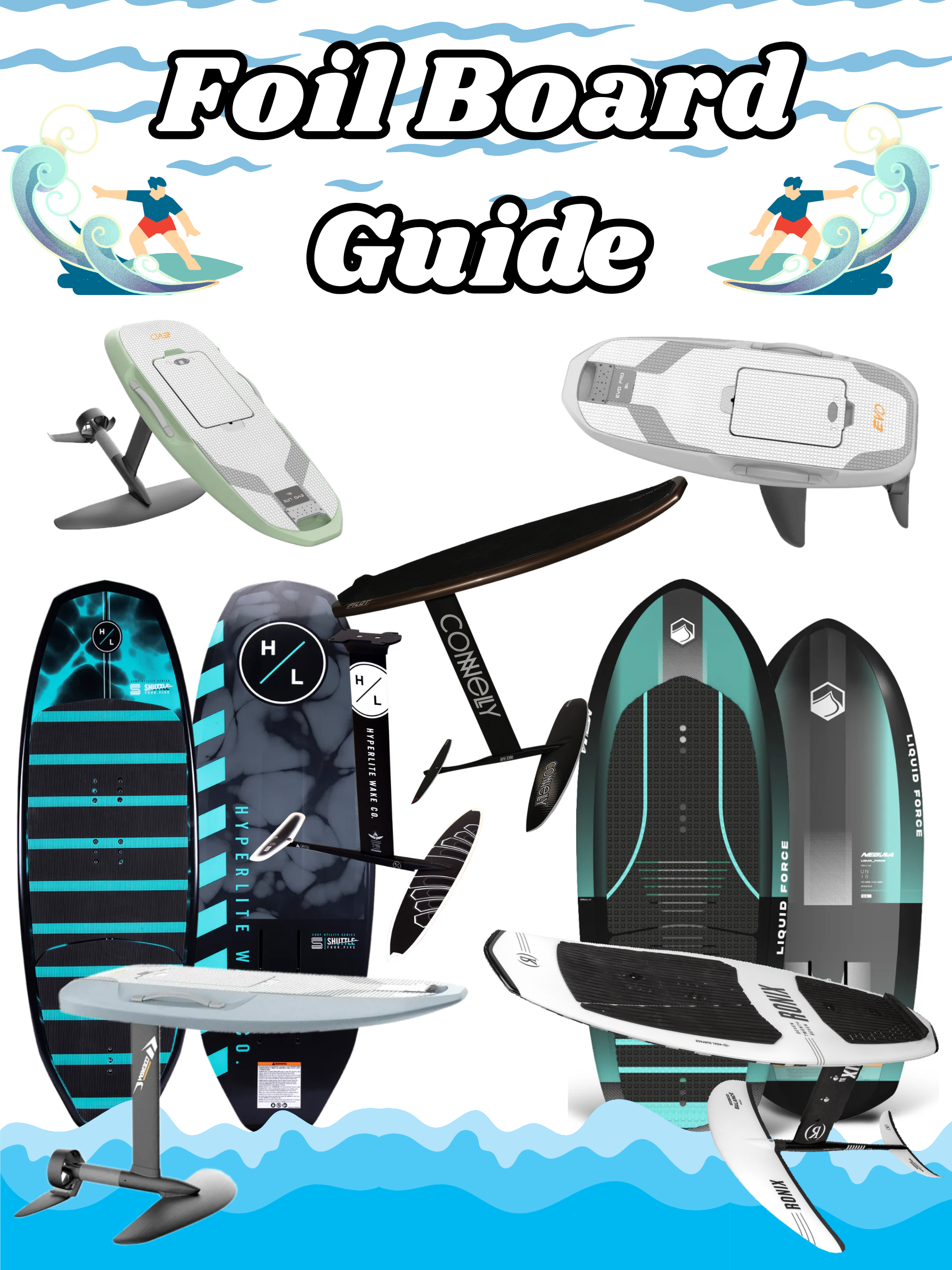
Foil Board Guide
Jan 21st 2026
An overview of the mechanics, parts, types, and how to ride foil boards.
What is a foil board?
Foil boarding is a relatively new watersports activity that allows you to glide smoothly along the water's surface. It uses a hydrofoil setup under the board to get you rising above the water. Hydrofoiling is versatile and can be used in various conditions. The reduced drag allows for longer, smoother rides for any wave that comes your way.
Freeride vs Freestyle boards
Freeride boards are built for smooth cruising and stability. They are generally longer and wider, making them ideal for beginners.
Freestyle boards are shorter and lighter, making them more agile and suited for tricks. They are best for experienced riders.
eFoil vs Foil Boards
Your typical foil board can be used behind a boat or by itself as you pump it through the water. Efoils are an electric hydrofoil that have their own small motor and prop that runs off a rechargeable battery. This allows the board to lift above the water without needing waves or a tow. The motors are attached to the mast, and riders control their speed with a handheld remote.
eFoils
Pros:
- Can reach up to 25+ mph
- Easier for beginners
- Has more of a flying or racing sensation
- Can ride in any conditions
Cons:
- Shorter ride time due to battery drain
- More maintenance is required to properly care for electrical components.
- Higher price tag
Foil
Pros:
- Can ride for as long as you would like (relies on natural forces for lift)
- Less maintenance required
- Lower price tag
Cons:
- Requires more skill to ride effectively
- Needs the right conditions to ride effectively
- Has a steeper learning curve
How to Ride
- The first step is getting comfortable on your board. Get a good feel for your board paddle out on your belly in chest deep water and practice popping up. The take-off process is just like surfing.
- Finding your balance. Start in a squatting stance, with feet shoulder-width apart. Keeping the back foot slightly over the foil will provide more control. Keep your shoulders open, chest vertical, and keep your knees bent and weight balanced and centered with the board.
- Understand the mechanics. Adding more pressure to your front foot will stop the nose from lifting too fast. The steeper the wave, the more you have to lean forward. The more you lean on your back foot, the more the wing will tilt upwards, creating more lift. Learning how to shift your weight effectively and understanding lift and drag is essential to advancing in this sport.
- Practice on calm waters. Starting behind a boat in calm conditions will help you understand how to board reacts to you as you move. It allows you to focus on technique without having to worry about paddling into the waves.
- Be okay with falling. Falling is a natural part of learning and advancing your skills. Getting comfortable with taking a spill can reduce fear and help you learn what not to do. When you do inevitably take a tumble, you want to fall clear of the board, dive away feet first. Doing this will help keep you safer and clear of the wings moving underwater.
- Build your skills. Once you start to get the hang of things, practice in flat waters or small waves (1-2ft), doing short glides, shifting weight side to side for gentle turns, and performing controlled stops. To start, point the board parallel to the wind or wave direction. Start gradually leaning forward while pumping the board by bending and straightening your knees to pick up speed. When turning, keep your eyes forward to where you want to go and gradually initiate the turn by shifting your weight to either your toes or heels. To stop, lean back slightly to reduce power, which will bring your board to a halt.
Parts of a Foil Board
Foil
The foil is a specialized underwater wing that generates lift while moving through the water. Its unique shape is engineered to cut through the water effectively. The larger the foil, the more stability it offers, making it better for novices learning how to handle the board.
Board
The board is the part you will be standing on and connects to the foil through the mast. A key element here is the board's weight. Lighter boards will react faster and offer more manverablity which can make for a more exciting ride. For beginners, wider boards are recommended as it provides more stability to riders who are learning to balance. Consider your weight when choosing a board, as heavier individuals may benefit from a larger board. Ultimately, it comes down to personal preference and what feels most comfortable.
Mast
This is the tall vertical piece that connects the board to the foil piece. It is the foundation of your ride; they come in various sizes, ranging from 45 cm to 110 cm. On average, it is around 80cm. The shorter the mast, the easier it is to learn on becuase your closer to the surface. But the shorter masts don't do as well in choppy waters, as you're more prone to breaching. They are better suited for beginners and those of you in shallow waters. Longer masts will give you more clearance in choppy conditions and offer more leverage, which can make you more unstable. The larger masts are advised for advanced riders. Where you position your mast can also affect your ride. If the mast is located toward the front of the board, it provides more lift, and as you move it back, it reduces the amount of lift but increases control in high speeds.
Wing
The front wing is what creates lift, allowing you to rise above the water. It is the bigger wing located at the front of the foil. The curve faces upwards as it moves through the water. The smaller the wing, the faster you can go with more maneuverability, medium wings have a nice balanced performance, and the large wings provide maximum lift, which can help in low wind.
The tail wing is responsible for stabilizing the front wing, located at the rear of the foil. The bigger the wing, the more stable you will feel with more control at lower speeds. The smaller the tail wing, the looser the feel and the faster the ride.
Fuselages
The fuselage is the central piece that connects the front wing to the tail wing. The longer the fuselage increases stablilty making them more forgiving and better suited for beginners or folks who just like to cruise. Short fuselages have less stability but offer quicker and more agile turns.
General Maintenance
- Always check your gear before an outing. Make sure screws are secure and check for any signs of wear or damage. Screws can vibrate loose after prolonged use, so always make sure to check before heading out. Using threadlockers can help to prevent screws and bolts from loosening.
- Rinse your foil board and all its parts with fresh water after each session to remove salt, sand, and debris. Once rinsed, make sure to let it dry fully before storing.
- Store in a cool, dry place away from direct sunlight and moisture.
- Regularly lubricate moving parts to keep screws from seizing and prevent rust. Recommended to lubricate after 5-10 sessions or immediately if you notice any increased friction or noise.
- Disassemble your foil periodically to clean joints and lubricate parts, especially after using it in salt water.
- Avoid using any harsh chemicals that can damage the surface and composition of the board.
- Do not over-tighten any bolts. Follow the manufacturer's specifications.
Tips
- Pick uncrowded spaces, as the foil piece can be dangerous when moving at high speeds in a congested area.
- Foot straps are optional and can be helpful to those just getting used to the sensation of floating above the water.
- Keep your head up and eyes on the prize. Keeping your head up and looking at where you want to go will help with balance and improve spatial awareness.
- Keeping your core activated will stabilize your body and help with balance.
- Wear safety gear. Especially when starting out, always wear a life jacket, and a helmet is recommended.
- Light winds are actually helpful when starting out; a steady breeze can help build confidence as you're starting out.
If you're interested in getting a foil board but want to give it a try first, we do group sessions to test out the Waydoo eFoils, and your payment for the tutorial goes towards your purchase. If you have any further questions about how foil boards work, let us know!
Open Monday - Saturday
9AM-5PM
206-762-1300